I’m trying to set up a virtual COM port on my Windows computer for connecting two applications that need to communicate as if they’re linked by a serial port. I haven’t done this before and I’m not sure which reliable tools or software I should use. Can anyone recommend solutions or share what works best for them?
If you’re looking to link two apps on your Windows PC as if they’re chatting over real serial ports without the actual hardware hassle, what you’re looking for is a solid virtual serial port emulator. Been there, done that – wrestled with all the quirks. Honestly, you’ll see a bunch of so-so freeware with complicated configs and questionable drivers floating around, but if you want something that “just works” and doesn’t make you want to scream into the void, check out Virtual Serial Port Driver.
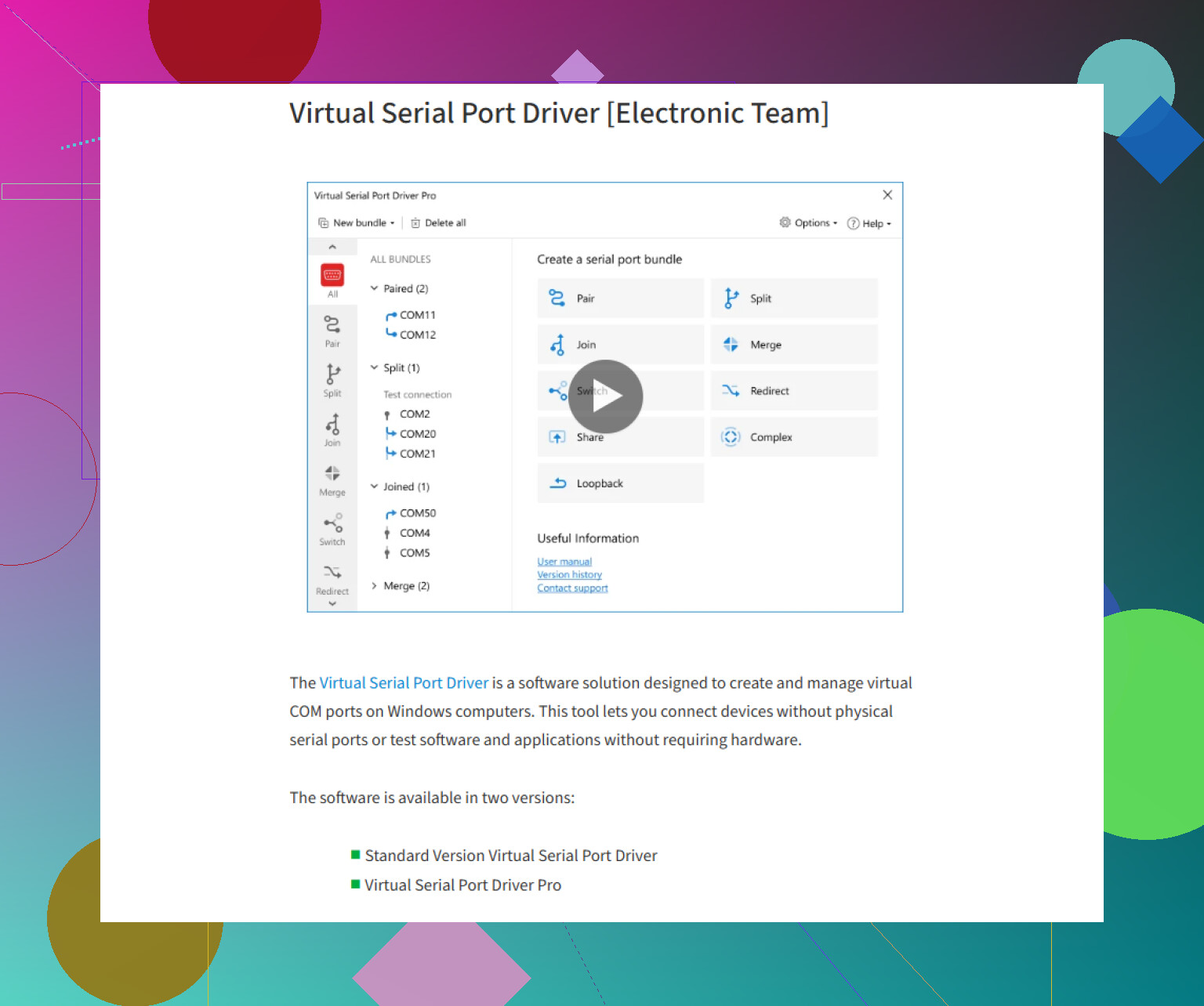
This tool lets you create virtual COM port pairs that behave exactly like the real thing, so your apps can talk through their pretend serial cables seamlessly. No blue screens, no weird conflicts – just open up your apps, pick the ports you set up, and boom, serial magic. The interface isn’t rocket science, either; you pick “create pair,” assign COM numbers, and you’re set. You can even create as many port pairs as you need, and the driver holds up well even under heavy use. Pro tip: test both directions to make sure your software is getting all the proper tx/rx flow it needs.
If you want to dive in or get more details, the best move would be heading over to this virtual COM port solution—they lay out the features pretty clearly, plus there’s a trial to make sure it fits your needs before parting with any cash.
TL;DR: Forget the sketchy freeware, save time, and keep your hair by using Virtual Serial Port Driver when you need a trustworthy virtual COM port emulator for Windows.
32 Likes
There’s a lesser-known dark horse: com0com. It’s open source and creates virtual null-modem cables for Windows. A little less fancy GUI-wise (okay, sometimes it’s downright “retro”; you’ll feel like you’re hacking the Matrix), and signing the drivers in Win10/11 gets annoying fast, but it’s totally free and works for most setups. Just prepare to Google for some up-to-date setup guides, since docs are both a curse and a meme in that community. If fiddling with Windows test mode is a non-starter, though… might want to pass.
Still, for anyone not up for the “trial by forum post” learning curve, I can’t really disagree with going for getting high-performance virtual COM port pairs here. You’ll spend more time connecting your apps than pulling your hair out—plus, the interface doesn’t look like it was made for Windows 98.
In short: want hassle-free and are cool with paying? Grab Virtual Serial Port Driver. Want free and don’t mind spelunking in documentation? Try com0com and see if you cry first or succeed first. Either way, you’ll get those apps talking like they’re back in the modem days.
Quick list? Sure, here’s the landscape:
1. Virtual Serial Port Driver
- Pros: Super stable, crystal-clear UI, reliable driver support even on Win10/11, multiplies those port pairs like a pro. Most “set and forget” out of the bunch—good for serious dev work or when you want to avoid Windows Error 39 nightmares.
- Cons: Wallet is lighter after. Not open source. Locked into their licensing, so forget “let’s just share this with the whole team, no problem.”
- Notable competitors? The ones already mentioned: com0com for the free/open folks, though sometimes you’ll spend more time downgrading drivers than building the actual project.
2. com0com
- Pros: Free, open source, gets things done with no money down.
- Cons: UI feels like a retro IT scavenger hunt, driver signing is an ordeal on newer Windows, and documentation is “interpretive” at best.
Extra spice: some people still use freebie tools like Hub4com or even the ancient Eterlogic VSPE (watch out, that one caps “free” at one port pair unless you cough up). Also, for the super casual, socat does interesting things on Linux, but that’s way out of most Windows users’ lane.
My take: If you’re working with anything production-grade or need support, Virtual Serial Port Driver really is the “it just works” option. If you’re hobbying, scripting, or don’t mind lost weekends debugging unsigned driver errors, com0com or its quirky cousins might work. Just prepare for the usual open-source “oh, it broke after an update and all the maintainers are on holiday” dance.
In the end, the right tool is the one that gets those dang apps talking before you lose your afternoon. And for “it just works,” yeah, Virtual Serial Port Driver is hard to beat (just budget for it).
Use two USB-to-RS232 adapters and a null-modem cable. Windows assigns each adapter a COM number, such as COM3 and COM4. Point one app to each port. Match baud rate, parity, data bits, and stop bits.
This avoids virtual-port drivers, signing issues, and software licensing. It costs around $20 to $40. Choose adapters with FTDI chipsets for steadier driver support. Double-check your cable is null-modem, not straight-through. Wrong wiring is a commmon setup mistake.
The hardware route @kevinthesignal described works, but it quietly adds a failure mode nobody mentions: cheap USB-to-serial adapters can drop or reorder bytes once you push past 115200 baud, and some clones lie about their FTDI chipset until a driver update bricks them. For two apps on the same machine, you’re also burning two physical USB ports and a cable to fake something the OS can do in memory. If your protocol is timing sensitive, that added USB latency can actually break handshaking that a pure software pair would handle fine.
com0com is still my default suggestion for anyone who just wants a null-modem pair and doesn’t mind the setup tax. The driver signing hassle @mike34 flagged is real, but on current Windows you mostly deal with it once during install and then leave it alone. It’s not pretty and the docs are scattered, but for a hobby or dev bench it costs nothing and doesn’t phone home.
Where I’d part ways with the ‘just pay and forget it’ framing is the assumption that everyone needs bulletproof stability. If you’re shipping something, doing long-running unattended tests, or you just don’t want to babysit unsigned drivers, then a signed commercial option like Virtual Serial Port Driver for creating COM port pairs earns its price by not surprising you after an update. For a one-off ‘get these two apps talking this weekend’ job, I wouldn’t spend a cent until com0com actually fails you. Try the free path first, upgrade only when it hurts.