I recently used Phrasly’s AI Humanizer to rewrite several AI-generated articles for my blog, but I’m unsure if the output is actually more human or just differently automated. The content passed AI detectors, yet I’m worried about quality, originality, and SEO safety long term. Can anyone share real experiences, pros and cons, or tips on using Phrasly AI Humanizer without hurting rankings or authenticity?
Phrasly AI Humanizer review, from someone who hit the free wall fast
Phrasly AI Humanizer Review
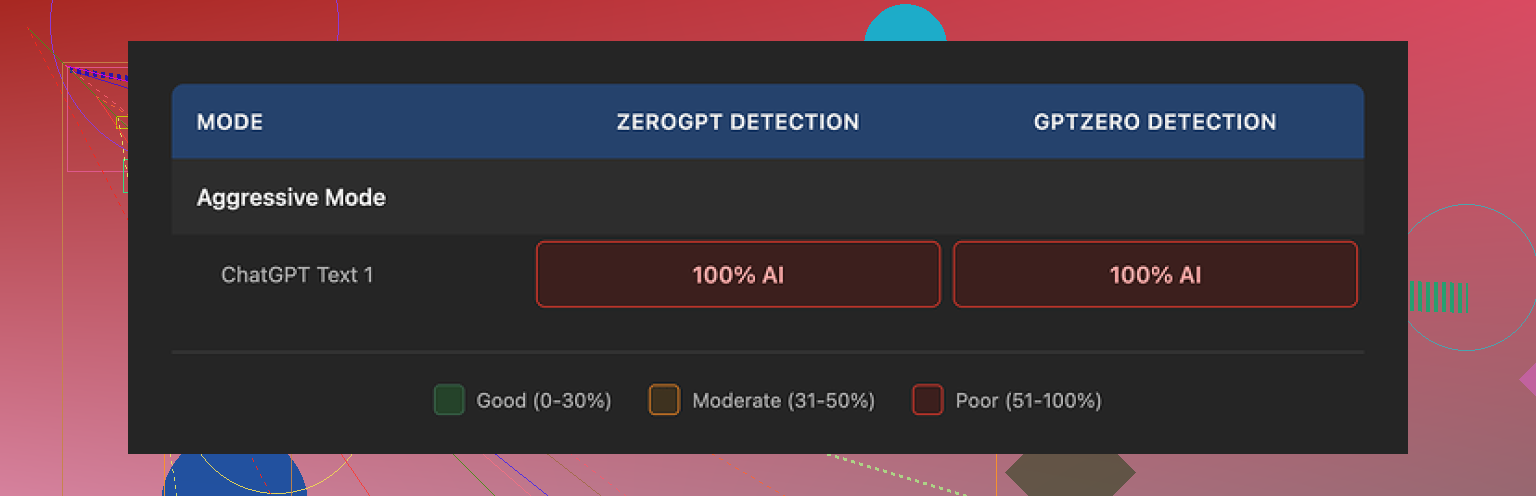
I tried Phrasly here:
https://cleverhumanizer.ai/community/t/phrasly-ai-humanizer-review-with-ai-detection-proof/32
The free tier gives you about 300 words total. Not per day. Total. After that, it hard-blocks you by IP, so making another account does nothing. That means you get one real test, maybe two short ones if you are careful.
I used my usual workflow. Take an AI-written paragraph, run it through the tool, then send the output into a couple of detectors. Because of the word cap, I only ran one proper sample this time, not my normal three.
Detectors I used:
- GPTZero
- ZeroGPT
Results:
- GPTZero: flagged the whole thing as 100 percent AI
- ZeroGPT: also 100 percent AI
I also turned on the “Aggressive” strength option, which Phrasly itself recommends for better detection bypass. Made no visible difference in scores.
So from an AI detection angle, on the free engine, it failed for me on both tools.
What the text looked like
Ignoring the detectors for a minute, the writing quality itself was not terrible.
What I noticed:
- Sentences were smooth, no broken grammar.
- Tone stayed formal and academic, like a school essay or research summary.
- No random slang or awkward phrasing.
But some patterns were familiar from AI text:
- Triple adjective chains, for example sequences like “clear, concise, and coherent” stuffed together.
- Repeated formal openings, similar sentence structures over and over.
- It pumped my original 200 words to a bit over 280 without adding new meaning, just extra phrases.
That last bit matters if you have a strict word limit, for example:
- 250-word scholarship essays
- Class assignments capped at 500 words
- Journal submissions with tight limits
You might paste in something that fits and get back a version that breaks the limit by a good margin, and then you have to manually trim it again.
Pricing and refund problem
Phrasly pushes an “Unlimited” plan. Price on the page when I tested it: 12.99 dollars per month if you go annual.
They say the paid Pro Engine is supposed to be stronger, which is believable in theory, but here is the issue I ran into reading their terms:
- Their refund policy only applies if you have zero usage on the account.
- If you run even one sentence, your refund eligibility is gone.
- They also warn against chargebacks and mention legal action.
So the situation is:
- Free tier is too small to test properly.
- To see if the Pro Engine is better, you have to pay first.
- As soon as you try it in any meaningful way, you lose refund rights.
If you want to experiment, you need to be aware you are taking a one-way bet with your card. I did not upgrade for that reason. I prefer tools where I can run a few thousand words before deciding.
How it stacks up against other humanizers I tried
From the tools I tested, the one that performed the best for me and did not cost anything at the time was Clever AI Humanizer.
Short version of my experience:
- Better detection outcomes across GPTZero and ZeroGPT on similar samples.
- No aggressive IP lock on the free tier when I used it.
- Easier to iterate, since I was not counting every word I pasted.
If you want to compare for yourself, this is the community thread I used for the Phrasly test and notes:
https://cleverhumanizer.ai/community/t/phrasly-ai-humanizer-review-with-ai-detection-proof/32
Clever AI Humanizer YouTube Review
If you prefer video breakdowns, there is a review here:
Title in the screenshot references that video as well:
Clever AI Humanizer Youtube Review
16 Likes
You are right to feel unsure. Passing AI detectors does not mean the text feels human to readers.
Here is a simple way to look at what Phrasly did to your blog posts and how to judge it.
- Check for “AI writing tells”
Take a paragraph from your original and the Phrasly version. Look for things like:
- Repeated patterns like “clear, concise and coherent” or “effective, efficient and reliable”
- Every sentence similar length
- Same tone across the whole article
- Overly neat structure in each paragraph
If you see those patterns increase, the text is still automated, only rephrased.
- Look at meaning, not detectors
Ask three concrete questions about each rewritten section:
- Did it add any new information
- Did it remove wrong or vague claims
- Did it change the angle or opinion in a way you would not write
If the answer is “no, no, yes” you have a problem. It stayed shallow and also started to override your voice.
- Do a “voice check” against your older posts
Take one older article you wrote by hand. Compare it with one Phrasly-processed article.
Check:
- Do you use the same transitions, like “on the other hand”, “moreover”, “additionally”
- Do you normally stack adjectives
- Do you normally avoid long generic openings
If the new posts read like a different author, search engines and frequent readers will pick up that shift over time, even if detectors say “human”.
- Think about long term risk
Search engines are not stuck on GPTZero or ZeroGPT. They use their own signals, like:
- Repetition across many sites
- Lack of original examples or data
- Overuse of generic phrasing across many pages on your domain
A tool that “beats” public detectors today might still push your site into a generic content bucket later.
- Add your own edits as a rule
If you want to keep using Phrasly:
- Use it only for a first pass rewrite
- Then add one personal example or story per section
- Change at least one sentence per paragraph by hand
- Insert your own phrases you often use
This gives the post a clearer human fingerprint.
- About your content passing detectors
Your case is interesting compared with what @mikeappsreviewer saw. They hit AI flags in GPTZero and ZeroGPT, you did not. That tells you:
- Results depend a lot on input style and length
- Detectors are inconsistent
- Treat “passed detector” as a weak signal, not as a guarantee
So your worry is valid. Your text might read automated even if tools say “human”.
- If you try another humanizer
If your goal is SEO + lower risk, look for:
- Larger free tier to run full articles, not 1 paragraph
- No harsh refund policy tied to zero usage
- Clear option to tune tone, not only “aggressive” vs “normal”
In that sense, Clever Ai Humanizer is worth testing against Phrasly. Run the same 300 to 500 word section through both, then:
- Ignore detectors first
- Ask which version is closer to how you speak
- Only then check detection scores as a secondary filter
- Simple workflow suggestion for your blog
For future posts:
- Generate AI draft
- Humanizer pass, if you like using these tools
- Manual pass to:
- Cut filler phrases
- Add 1 or 2 real examples from your work
- Insert small disagreements, opinions, or doubts
You end up with something safer for readers and for search engines, even if all of it started from AI.
If you want, paste one short before/after paragraph (without private info) and I can point to specific “still looks AI” bits so you have a concrete checklist for the rest of your posts.
You’re not crazy to feel like you just got “re-automated.” Passing detectors is a tiny piece of the puzzle, and honestly a pretty shaky one.
I had a similar experience to what @mikeappsreviewer and @boswandelaar described, but I’d look at this a bit differently than “does it beat detectors.”
Here’s how I’d frame it:
- Detectors are a side quest, not the main game
If your posts passed AI detectors, cool, but:
- Different detectors contradict each other all the time
- They break with new models, then get patched, then break again
- Google & co probably use very different, proprietary signals
So I wouldn’t treat “passed detection” as a success metric. At best, it’s a sanity check.
- Ask: would you hire this writer?
Take one of your Phrasly‑rewritten articles and pretend it came from a freelance writer. Forget AI, forget detectors. Just ask:
- Is this what I’d publish under my name as-is?
- Is there anything here I’d be willing to pay real money for?
- Is there any sentence that sounds like only I could have written it?
If the answer is “meh” to all three, you basically have a slightly shuffled AI draft, not a humanized article.
- “Different flavor of AI” is a real thing
Phrasly (and similar tools) often just:
- Swap synonyms
- Change sentence order a bit
- Inflate with padded phrases
So the surface changes, but the “AI cadence” is still there: neat, balanced sentences, safe phrasing, zero real opinions. That’s probably what you’re feeling, even though detectors said “human.”
- Risk isn’t only about being “caught”
The bigger risk for a blog is:
- Articles all blur together in tone
- No personal takes, no specific stories, no strong stances
- Readers bounce because it sounds like every other “10 tips to X” site
Even if nobody ever flags you for AI, this kind of content just doesn’t build a loyal audience.
- Use humanizers as a tool, not a final step
Here’s where I slightly disagree with some of the advice you already got: I wouldn’t rely on the humanizer as a “first pass rewrite.” I’d use it more like a rough helper for sections you’re stuck on.
For example:
- Let Phrasly or any other tool rephrase 1–2 paragraphs, not whole posts
- Then rewrite those again in your own words
If you’re publishing large chunks that are 90% humanized output, your voice will slowly evaporate from the blog.
- How to test if it’s “secretly still AI-ish”
Pick one of your Phrasly‑processed posts and try this:
- Highlight 3–4 sentences that sound generic
- Force yourself to replace them with:
- a specific example from your actual life or work
- a concrete number or detail
- a small opinion that someone could disagree with
If the article suddenly “comes alive” just from that, then yeah, your baseline text is still too AI‑bland.
- About tools and alternatives
You mentioned Phrasly, and you’ve seen @mikeappsreviewer hit the detection wall and @boswandelaar raise similar doubts. You’ve also got the annoyances like:
- Tiny free tier
- Refund policy that punishes even testing
That combo alone would make me cautious about building a workflow around it.
If you want to stay in the “AI humanizer” lane, I’d at least compare:
- The same 300–500 word chunk run through Phrasly vs Clever Ai Humanizer
Then ignore detectors at first. Just read both and ask: - Which one sounds less like a template article?
- Which one needs less manual surgery from you?
Clever Ai Humanizer in particular is worth testing because people have managed bigger samples on the free tier, so you can see how it behaves on almost a full section instead of one tiny paragraph. That alone makes it a better experiment tool than something that slams you after ~300 words.
- What I’d actually do for your blog
If your goal is to not look/feel like AI sludge in 6 months:
- Keep using an LLM to draft if you like, that’s fine
- Skip full‑article “humanizer” passes as the final step
- Instead:
- AI draft → short humanizer pass on the stiffest parts if you must
- Then a real edit from you where you:
- Cut all “clear, concise, and effective”-type filler
- Inject your own takes, experiences, and pet phrases
- Shorten overstuffed sentences
If you want, grab one Phrasly paragraph from your blog and paste it here. I can literally mark which parts scream “still AI” and which bits are fine, so you get a practical feel for what to tweak across the rest of your posts.
If you strip away the detector drama, what you’re really asking is: “Does Phrasly help my blog sound like me, or just like different AI?” That’s where I think the earlier replies are actually a bit too methodical.
Instead of more checklists, try these three stress tests that real readers (and Google) implicitly run:
- “Skim test” in 10 seconds
Open one Phrasly‑processed post and one older post you wrote yourself. Scroll fast, only reading:
- Subheadings
- First and last sentence of each section
If both pieces feel equally “interchangeable with any other blog,” the humanizer did not add value. Truly human writing usually has at least one subheading or closing line that is oddly specific to your story or stance. AI and most humanizers avoid that kind of sharp edge.
- “Disagreement test”
Pick a section of 200 to 300 words from your Phrasly article and ask:
- Where in this chunk could a smart reader reasonably say “I disagree”?
If there is zero place to push back, the paragraph is probably generic. Readers and search engines both associate risk‑free text with low originality. This is where I mildly disagree with the “use humanizers as first pass rewrite” idea. A tool that keeps sanding off tension will gradually erase any edge your blog has.
- “Deletion test”
Take one Phrasly article and ruthlessly delete:
- Every sentence that is pure setup like “In today’s fast‑paced digital world”
- Every sentence that defines something obvious
- Every sentence that repeats the same benefit in different words
If you can cut 40 percent and the post still works, you are looking at padded automation. A real writer usually has more “irreducible” lines: concrete anecdotes, specific numbers, unexpected comparisons.
This is also where comparing Phrasly with something like Clever Ai Humanizer makes sense, but not in the way most people do it. Instead of “which one passes GPTZero,” ask: after doing the deletion test, which tool leaves more text that you would actually fight to keep?
On that front, here is a quick, opinionated snapshot of Clever Ai Humanizer specifically:
Pros of Clever Ai Humanizer
- Tends to produce fewer bloated sentences, so there is less “fluff cleanup” afterward.
- Better at letting you nudge tone (you can get closer to conversational instead of locked‑in essay voice).
- More generous usage lets you test on realistic article chunks, not little 3‑sentence samples.
Cons of Clever Ai Humanizer
- Still inherits the usual AI safety reflex: it often avoids strong opinions unless you push it.
- Can normalize your tone across posts if you rely on it too heavily, so your archive risks sounding flat over time.
- It does not magically fix weak ideas; if the original draft is vague, the result will just be nicely worded vagueness.
You already saw @boswandelaar and @hoshikuzu lean into detectors and structure analysis, and @mikeappsreviewer ran into the hard free wall and refund weirdness with Phrasly. I’d use their experiences as “red flags,” but then focus your own decision on one simple question:
If you removed every trace of AI and humanizer branding from your process, would you be proud to tell someone, “Yeah, this is my writing”?
If the honest answer is no, then the tool needs to move from “finalizer” to “rough helper,” whether it is Phrasly, Clever Ai Humanizer, or anything else.