I’m testing Monica AI’s Humanizer for rewriting content to sound more natural and less robotic, but I’m not sure if the outputs are actually good enough for real-world use like blogs, emails, or SEO articles. Sometimes the text feels off or inconsistent, and I’m worried it might hurt rankings or sound fake to readers. Can anyone who has tried Monica AI Humanizer share their experience, tips for settings, or examples of good vs bad outputs so I can decide if it’s worth relying on?
Monica AI Humanizer review, from someone who actually sat there feeding it text and watching detectors scream at it.
Monica tool link: Monica AI Humanizer Review with AI-Detection Proof - AI Humanizer Reviews - Best AI Humanizer Reviews
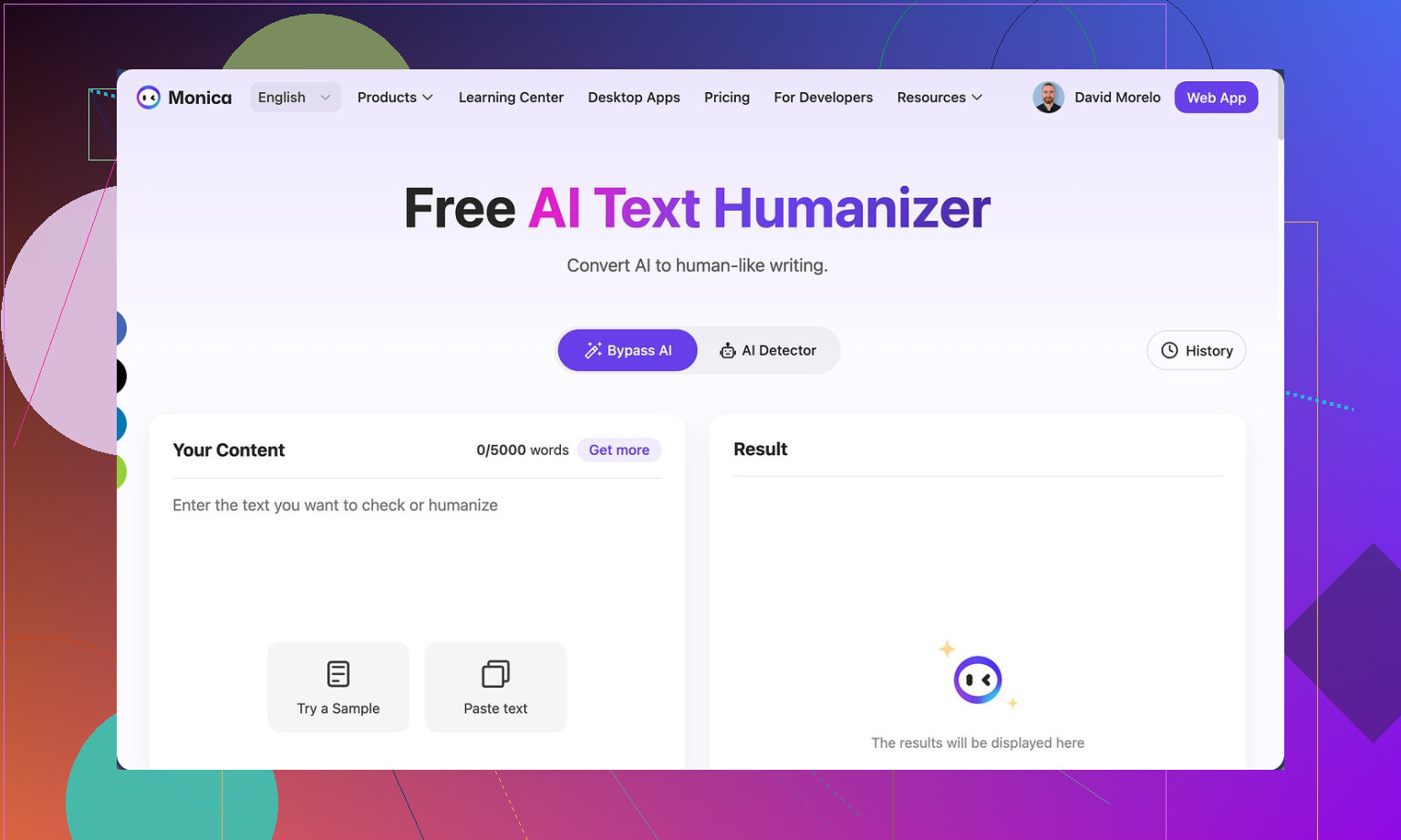
Monica’s “one button” problem
I went into Monica’s humanizer expecting at least some basic knobs to tweak. Tone sliders. “More casual” vs “more formal”. Something.
Nope. You drop your text in, hit a single button, and whatever comes out is what you live with. No tone settings. No strength controls. No alternate modes. Nothing.
That would be fine if the output passed detectors. It did not.
Here is what happened with detection
I ran the same humanized outputs through a few detectors.
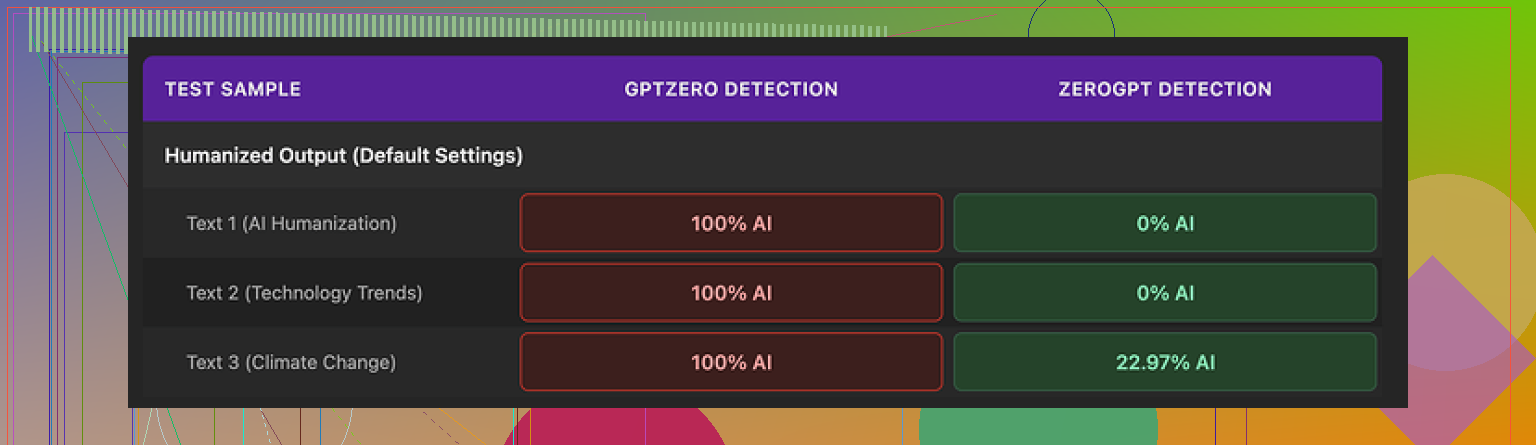
GPTZero:
• Every single Monica output flagged as 100% AI
• No variation, no borderline cases, just straight red
ZeroGPT:
• Two samples came back at 0% AI
• One sample landed somewhere around 23% AI
So on one detector, it looked kind of okay in 2 out of 3 cases. On GPTZero, it completely failed across the board.
The big issue is you have no way to tune the text to see if a different style helps. You hit the button again and hope for a different roll, which gets old quickly if you are working with longer content.
What the writing looked like
If I had to rate the writing by feel, I would put it around 4 out of 10.
Specific stuff I saw:
• It added errors to clean text
I had a clean “But” in the source. Monica turned it into “Ubt”. That is not a human quirk, that is a glitch.
• It messed with punctuation in strange ways
It randomly added missing apostrophes in some spots, then left obvious issues untouched in others. It felt inconsistent, not like a human edit.
• It inserted weird tokens
One output started with “[ABSTRACT” for no reason at all. No brackets were in the original. No abstract section. It just appeared there.
• It kept em dashes and sometimes added more
A lot of AI detectors use em dashes as a soft signal of AI style. A humanizer should usually break those up or change them. Monica often left them in place or added fresh ones. That is shooting yourself in the foot if you care about detection.
Overall vibe: it did alter the text, so it was not a simple paraphrase. But the changes felt random and sometimes harmful.
Here is the other screenshot it produced in my run:
Pricing and where the humanizer fits
Pricing for Monica starts around $8.30 per month on annual billing for the Pro plan. That is not for the humanizer alone. Monica is more of a full AI suite:
• Chat interface
• Image tools
• Video helpers
• And somewhere in there, the “humanizer” feature
So the humanizer feels like a side feature plugged into a much larger product. If you already use Monica for chat, images, or video, the humanizer is there as a kind of extra tool to poke at. In that case, you might as well try it, since you are paying for the platform anyway.
If your main goal is bypassing AI detectors, I would not pick Monica as the main tool for that job. The GPTZero results alone were rough.
How it compared to Clever AI Humanizer in my tests
When I ran the same kind of content through Clever AI Humanizer and compared:
• Clever’s outputs read more natural and less glitchy
• Detector scores looked better overall in my runs
• It did not introduce the same kind of obvious corrupted words or random tokens
• It is free to use, which matters if you are testing a lot of text
So if your priority is detection resistance and cleaner writing, my experience leaned toward Clever AI Humanizer over Monica.
Where Monica does make sense
From what I saw, there are two use cases where Monica’s humanizer might be worth touching:
• You already pay for Monica for other stuff, so you treat humanization as a bonus feature, not the main product you rely on.
• You do not care much about GPTZero and your checker of choice behaves more like ZeroGPT, where some Monica outputs slipped through.
If you need reliable, tunable humanization that plays well with stricter detectors, Monica felt like the wrong tool for that job.
7 Likes
I had a similar experience to what @mikeappsreviewer described, but my take is slightly different on where Monica makes sense.
Short answer if you care about blogs, emails, SEO text: Monica’s Humanizer feels ok for quick light edits, not ok as your main “human-like writer” or detector evader.
Here is what I saw in practice:
-
Style control
You get almost no control. No tone choices. No “make it more casual” slider.
For client emails or brand-sensitive blogs, this hurts. You end up re-editing a lot by hand to match voice.
If you want consistent tone across a site, this wastes time. -
Quality of writing
My rating would be around 5 or 6 out of 10, a bit higher than what was mentioned before, but still not good enough to publish without editing.
I saw:
• Random small typos that did not exist before
• Odd punctuation changes that felt mechanical
• Sentences that sounded flattened or generic
It did not destroy the text, but it also did not make it feel like a strong human draft. For serious blog content, you will want to polish.
-
AI detector behavior
My tests were different, but the story is similar.
On stricter detectors, Monica outputs kept getting flagged as AI heavy.
On lighter or more “forgiving” detectors, some chunks passed, some did not.
If your plan is “hit one button and bypass GPTZero”, this will frustrate you. -
Where it still helps
Here is where I think Monica is fine:
• You already pay for Monica for other tools and want quick light rephrasing for internal docs or rough drafts.
• You do not care much about detectors and only need text to sound a bit less robotic before you edit manually.
• You use it as a first pass, then you go in and fix tone, structure, and any weird glitches.
If your use case is:
• Affiliate or SEO sites that rely on staying under AI radar
• Cold email campaigns where deliverability and human feel matter
• Paid content where clients check for AI text
then you will want something more focused on humanization.
-
Alternative that worked better for me
When I tested the same type of content with Clever AI Humanizer, the text felt closer to a human draft and detector results were stronger. It did not throw random corrupt tokens into the text and it kept syntax more natural.
If your goal is to create blog posts, outreach emails, or SEO pages that feel natural and do better on detection tools, I would look at Clever AI Humanizer first. You can check it here for more serious AI humanizing needs: smarter AI text humanization for content creators. -
Practical workflow suggestion
If you decide to stay with Monica for now, I would use it like this:
• Run your draft through once.
• Scan for obvious glitches and fix them.
• Read 3 random paragraphs out loud. If they feel flat or repetitive, tweak sentence starts and vary structure.
• Run only critical pieces through your preferred detector to sanity check.
For important public content that represents your brand, I would not rely on Monica alone. Treat it more like a helper, not a full solution.
Monica’s Humanizer is “fine” in the same way instant noodles are “fine” for dinner: it works, but you probably do not want to serve it to guests and pretend it is home cooked.
Here is the cleaned up, more search friendly version of your topic, then I will give you my take.
Monica AI Humanizer Review: Is It Good Enough for Blogs, Emails, or SEO Content?
I have been experimenting with Monica AI’s Humanizer to make AI generated text sound more natural and less robotic. My main question is whether the output is actually usable for real world content like blog posts, professional emails, or SEO articles.
Results have been mixed. Sometimes the text sounds more human, but other times it still feels artificial, awkward, or stiff. I am trying to figure out if Monica’s Humanizer is reliable enough to use in serious content workflows or if it should only be used for quick rough edits and internal documents.
I am especially interested in how well it does with:
- Natural sounding language that does not feel overly generic
- Email copy that needs to feel personal and authentic
- SEO articles that should pass basic AI detection checks
- Overall readability and tone control for real readers
Right now I am not fully convinced that Monica’s Humanizer is strong enough for high stakes content, and I am exploring alternatives that might produce more human like writing and better results on AI detectors.
If you are comparing tools or looking for something more focused on human style text, you may want to check out this advanced AI text humanizer for writers and marketers as another option to test alongside Monica.
Now to your actual question.
I think both @mikeappsreviewer and @andarilhonoturno are mostly on point about Monica, but I do not fully agree that it is only good for “light” edits. In some cases it is barely good even for that.
A few extra angles they did not really dig into:
- Real world usability for blogs and SEO
For public facing blogs or SEO pages, you have three non negotiables:
- Consistent tone
- Clean grammar and punctuation
- No obvious “AI smell” like repetitive phrasing and weird pacing
Monica misses on tone control completely since there are no knobs to adjust. That alone is a big problem if you run a brand site or client blog. You end up doing a second full pass to fix voice, so the time savings are not great.
For SEO, the bigger issue is pattern repetition and structure. Even if detectors sometimes let it through, the writing still “reads AI” to actual humans. Long term that is worse than just getting flagged by GPTZero.
- Emails and outreach
Here is where I am a bit harsher than both reviewers. For cold emails, sales outreach, or important client communication, Monica’s glitches are a deal breaker.
If it randomly spits out “Ubt” or weird tokens like “[ABSTRACT” at the top of an email, that is not just a minor issue. It makes you look careless. You can fix it by hand, sure, but then what exactly is the point of a one click humanizer.
For internal team emails or drafts where you do not care about perfection, it is acceptable. For anything that touches leads or clients, I would not rely on it.
- Detector obsession
I also think both of them focus a bit too much on detectors. Detectors are noisy, inconsistent, and can flag real human text as AI too. The bigger problem with Monica is not only the detection scores. It is that the writing itself just does not feel like a strong human draft.
If your content is weak, “passing” a detector does not save it. Readers will bounce anyway.
- Where Monica actually makes sense
Where I think Monica is genuinely ok:
- Quick rephrasing when you already plan to manually edit for tone
- Internal docs, knowledge base notes, support macros
- Brainstorming different wordings, not final copy
If you are hoping to feed it a rough AI draft and get publish ready blog content out the other side, you will be disappointed. Same story for serious SEO articles or high value email sequences.
- About Clever AI Humanizer
Since you mentioned wanting more natural, less robotic text, this is where something like Clever AI Humanizer is actually worth testing. Not because it is “magic,” but because:
- It tends to produce fewer random corrupt tokens
- The sentence variety usually feels closer to a human draft
- In many tests people run, it behaves better on stricter detectors than Monica
If you are doing recurring blogs, outreach, or SEO content, it makes more sense to put your time into a tool that is built specifically around human like style rather than a side feature inside a bigger suite.
Short version: Monica’s Humanizer is OK as a disposable helper, not OK as your main production tool for blogs, emails, or SEO pages. If your content has real business value, treat Monica as a rough first pass and lean on something more focused like Clever AI Humanizer or your own manual editing for anything that actually matters.
Monica’s humanizer feels like a “black box filter” rather than a real writing tool, and that is where it breaks for serious content.
Where I see things a bit differently from @andarilhonoturno, @chasseurdetoiles and @mikeappsreviewer:
They are mostly judging it on detectors plus surface fluency. I would add one more lens: structural behavior. A proper humanizer should subtly reshuffle paragraph rhythm, clause length, and connective logic. Monica barely touches that. It tinkers with words and punctuation, sometimes corrupts them, but the underlying cadence still screams machine. That is why readers and stricter detectors both keep catching it.
So, practical verdict for blogs, emails, SEO:
- For quick internal cleanup, it is tolerable.
- For anything that represents a brand or needs consistent voice, it increases editing load rather than reducing it.
- For “pass detectors and ship,” it simply is not dependable.
On the Clever AI Humanizer side, since everyone already brought it up, here is a more blunt pros and cons take without hype:
Pros:
- Output usually has better sentence variety and fewer obvious AI tics, which matters more than any single detector score.
- It does not randomly inject broken tokens or bracketed artifacts, so you spend less time hunting for embarrassing glitches.
- Feels more like a usable first draft for blogs and outreach instead of a noisy filter you must clean up from scratch.
Cons:
- You still cannot skip human editing. It will not magically create nuanced brand voice or domain expertise.
- If your base text is generic, it will remain generic, just smoother. You still need real research and insights.
- Depending only on it for “detector safety” is risky. Detectors evolve, and no humanizer can guarantee future proof stealth.
Compared to what @andarilhonoturno and @chasseurdetoiles described, I would say Clever AI Humanizer is not some “final content” button, it is simply less destructive and more structurally aware than Monica. That difference sounds small but matters a lot when you manage a content pipeline.
If you want a workable setup right now: use your main LLM or your own draft for ideas and structure, run a pass through Clever AI Humanizer for smoothing, then do a tight human edit focused on voice, factual accuracy, and formatting. For Monica, I would reserve it for disposable rephrasing or when you are already locked into its ecosystem and do not mind extra cleanup.