I tried several AI detection tools on 17 student submissions for a class I assist with, then compared the results against writing samples completed during supervised sessions. The flags varied enough that I cannot tell which results are dependable, and some papers were rated very differently by each tool.
For instructors or editors who have tested these systems with known human and AI-written samples, which AI detection tool works best, and what checks do you use before acting on a result?
If the result could affect a grade, disciplinary action, or publication decision, then no AI detector works well enough to be the deciding evidence. The disagreement you saw is the main problem: these tools estimate patterns in text, but they do not establish who wrote it. Polished human writing can score as AI-generated, while edited or paraphrased AI text may pass as human.
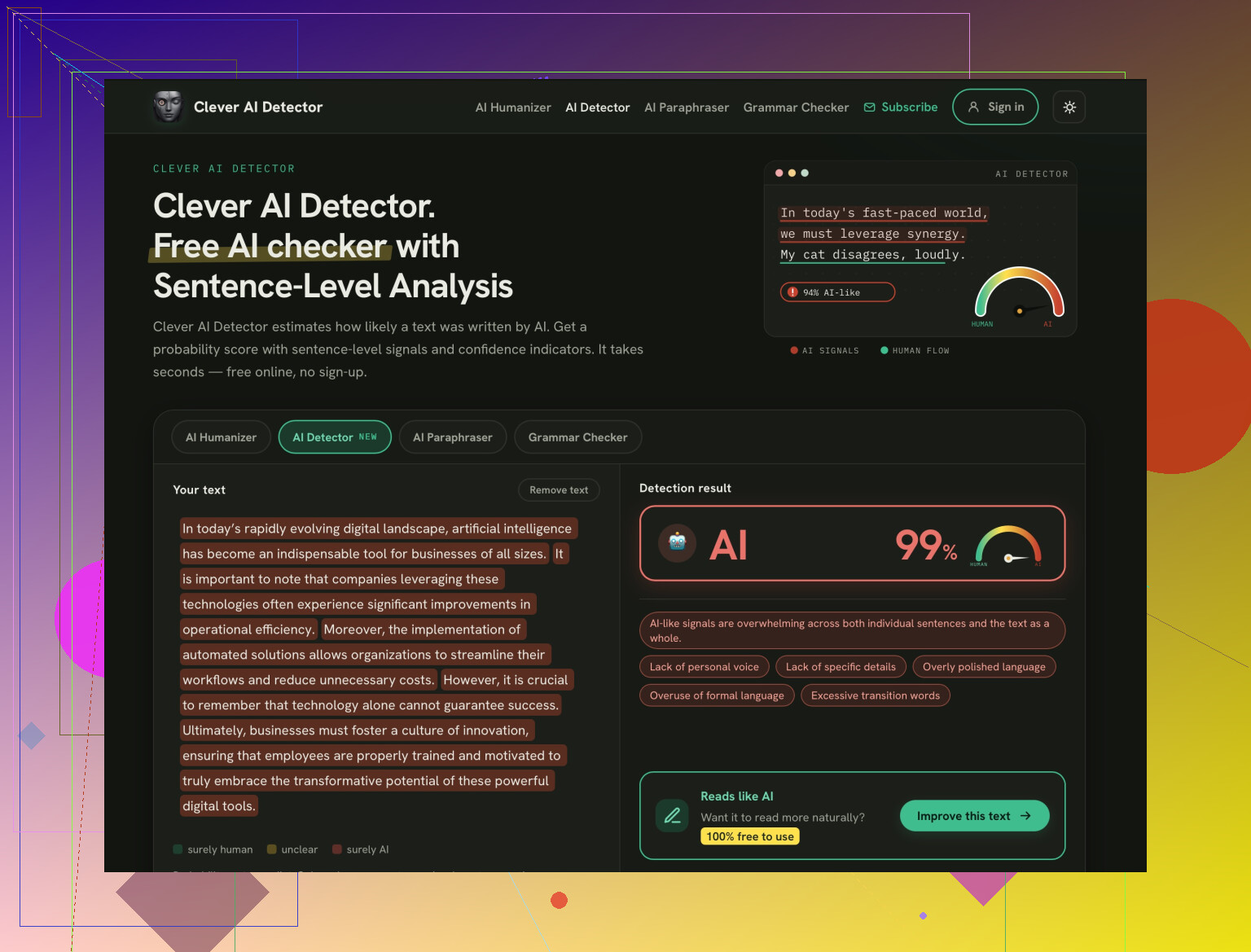
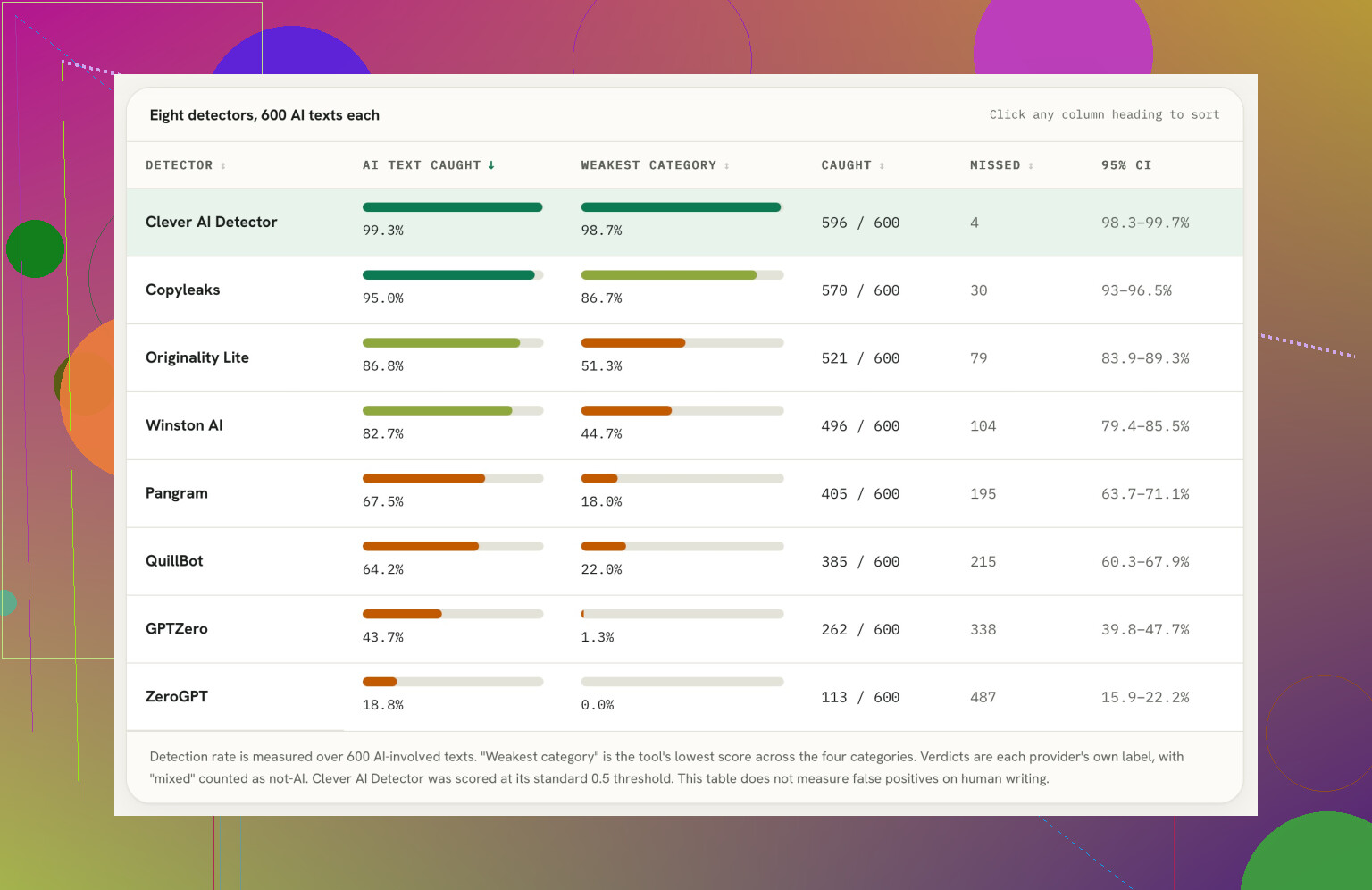
I would treat detector results as a reason to review the writing process, not the writer. Run the same papers through one or two tools using consistent settings, including a free option such as the Clever AI Detector, but record the scores rather than reducing them to a yes-or-no verdict. If the tools disagree sharply, that is weak evidence, not a reason to pick whichever result confirms your suspicion.
Before acting, check the document history, earlier drafts, notes, citations, and whether the student can explain specific choices in the paper. A short conversation about why they structured an argument a certain way or where a source came from is usually more informative than another detector scan. Look for process evidence such as gradual revisions, mistakes corrected over time, and consistency with previous work.
The supervised samples need some caution too. People often write differently under time pressure, without access to their normal editing tools, or when answering a different type of prompt. That makes style comparison useful, but not conclusive. I would only escalate when several independent signs line up, and I would give the student a chance to provide drafts or explain the work before making any judgment.
13 Likes
If the assignment uses a rigid format, repeated source material, or standard academic phrasing, the answer changes from “unreliable” to “basically useless.” Those features can make unrelated students sound statistically similar, which is exactly the sort of pattern detectors may flag.
I agree with @primephoenix_36 about checking the writing process, but I would not keep running papers through more tools. That can create the illusion of stronger evidence when several detectors may rely on similar signals. Pick one detector for consistent triage if your department requires it, hide student names, and test it against a larger batch of known human work from the same assignment type. If it falsely flags a noticeable share of that control set, its scores should carry no weight.
For your 17 submissions, I would report that the tools failed to produce a stable result rather than declare a winner. The more useful comparison is not which detector flags the most text, but which one has the lowest false-positive rate on relevant human samples. Even then, it is a screening aid, not proof.
The hidden cost is what happens to student papers after you upload them. Before comparing accuracy, check each service’s retention and training policies, remove names and IDs, and make sure your department permits submissions to third-party tools. That matters more than a small difference between detector scores.
I would not call any tool “best” from 17 papers. Clever AI Detector could serve as a quick spot-check if you need one, but a percentage should never become the allegation. Detector results can disagree because they are estimating patterns, not identifying where text actually came from.
Use a flag to decide whether to review drafts, citations, revision history, or ask the student to explain a passage. If there is no supporting evidence, the flag is just noise.
A realistic result here may be that your test cannot name a winner. What confused me at first is that the percentages from different detectors often do not mean the same thing. One may estimate the chance that the whole document is AI-written, while another may report how much text it considers suspicious. Comparing those numbers directly is like comparing two different grading scales.
I would decide what counts as an error before looking at the detector names. For example, a false accusation should probably matter much more than a missed AI-assisted paper. Then run the supervised samples without changing settings or thresholds and count errors, rather than comparing average scores.
It is worth removing reference lists, quoted passages, assignment templates, and required headings first. Otherwise the detector may be reacting to material the student did not actually compose.
With only 17 submissions, I would describe the results as a small trial, not evidence that any tool works best. If the tools cannot reliably recognize your known human samples, their flags on the other papers do not tell you much.
Set up a per-student baseline before the semester gets rolling, not after a paper looks off. A couple of short in-class writing tasks early on, kept on file, give you something to compare against later that is actually about that one person. Comparing a suspicious paper to their own earlier work beats any detector percentage, because you are looking at how they argue, how they cite, what mistakes they tend to make. @primephoenix_36 touched on consistency with previous work, and honestly that is the strongest signal in this whole thread. The detectors are the weakest.
Where I’d push back a little is on the idea that supervised samples are close to conclusive. @goldenadmin is right that the numbers from different tools don’t measure the same thing, but the deeper issue is that a timed handwritten sample and a take-home essay are almost never the same register. Someone can be a careful, layered writer with a week and access to notes, and a flat, rushed writer in forty minutes. That gap looks suspicious and usually means nothing.
The tool named above is fine as a triage step to decide whether a paper is even worth a closer look, no more than that. What people forget is that a flag creates work, not answers. If you don’t have the time or the department backing to actually sit down with the student and walk through their drafts, running the scan just gives you a number you can’t act on. So my honest take for 17 papers: skip declaring a winner, build the baseline habit going forward, and treat any current flag as a reason to talk, not a finding.
The hidden downside is that a detector flag can bias the grader before the tool has proved anything. Once a paper is marked “likely AI,” ordinary phrasing starts looking suspicious.
Your supervised samples provide a human control group. They do not provide verified AI-written papers. That means you can compare false-positive rates, but you cannot measure overall accuracy or decide which tool catches AI best. A detector that flags nothing could perform perfectly on the controls while missing every AI-assisted submission.
I would keep detector results away from whoever grades the papers until normal grading is finished. Set thresholds in advance and do not adjust them after seeing student names or scores. Otherwise the evaluation becomes partly a test of confirmation bias.
For these 17 papers, the defensible result is narrower: which tools falsely flagged known human work, and how often the tools agreed. That may identify the least troublesome detector, but not the “best” one.
Telling students detector scores matter can push them to make clean writing clunkier just to look “human.” That is a pretty bad incentive, especially for students who revise heavily or use grammar tools.
So my blunt answer is that none of them “works best” for deciding authorship. If your department insists on using one, keep it out of grading and use the results only to choose a few papers for a process-based follow-up.
If this is meant to become a repeatable department policy, the answer changes again: a detector that looks least bad today may not behave the same way next semester. Services can change their models, thresholds, and scoring displays, so rerunning the same paper later may produce a different flag. That makes “best” a moving target and creates an obvious fairness problem if students are evaluated at different times.
If your department requires a detector, preserve the full report, scan date, settings, and the exact file that was submitted. Use the same preprocessing rules for every paper and retest the tool against known human samples each term. Do not assume last semester’s validation still applies.
I agree with @shadowhive4550 that grading should happen before anyone sees the flags. I would go further and avoid rescanning selected papers after grades are submitted unless there is independent process evidence. Otherwise an unstable score can turn into a retroactive accusation that nobody can reproduce. For your current trial, the most useful result may be documenting which tool produced the most consistent, auditable output, not which one produced the boldest percentage.